
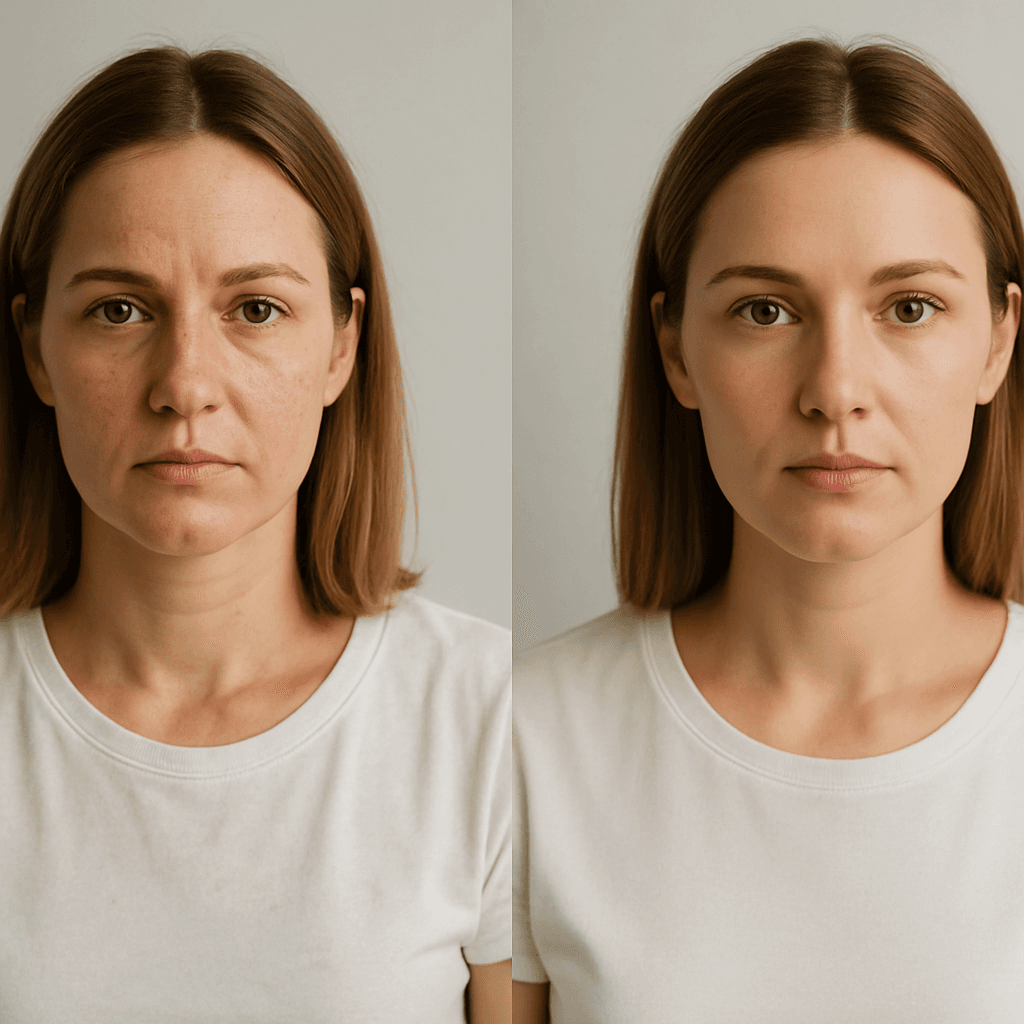
Before-and-afters are great, but you may be looking at another doctor's results!
Before-and-after galleries can help you understand a surgeon’s aesthetic style and the kinds of changes that may be possible. They can also help you compare results in patients with similar anatomy, skin tone, age, or concerns.
However, photos should not be treated as proof that your result will look the same. They are marketing materials. A great-looking image does not confirm that the result is typical, that the doctor personally performed the procedure, or that the same outcome is realistic for you.
This matters for international patients considering surgery in Turkey or any other country. You may be making decisions from a distance, often based on websites, social media, and messages with a clinic. Photos can be one part of your research, but they should never be the only reason you choose a doctor.
Could a clinic show another doctor’s results?
It is possible for cosmetic advertising to be misleading. That does not mean most doctors fake photos, but patients should be cautious. Some websites or social media pages may use images without enough context, may present selected “best case” outcomes, or may use photography techniques that make results look more dramatic than they are.
The American Medical Association states that physician advertising should not be false, misleading, omit necessary information, or create unjustified expectations. Objective claims about experience or quality should be factually supportable.
Ethical advertising guidance from the American Society of Plastic Surgeons also warns against misleading before-and-after techniques, such as using different lighting, poses, or photographic methods that misrepresent results. It also states that models should not be presented as if they received the advertised service unless that is clearly disclosed.
What a reliable before-and-after gallery should show
Good medical photography aims to make comparison fair. The “before” and “after” images should be taken in similar conditions so that any visible change is more likely to reflect the treatment rather than camera technique.
Look for consistency in the photos
Similar lighting in both images
Similar background
Similar camera distance and zoom
Similar angle and body position
Similar facial expression, if the face is shown
Similar framing, such as the same view of the nose, breasts, abdomen, or body area
If the “after” photo has brighter lighting, better posture, makeup, a different facial expression, or a more flattering angle, the improvement may look larger than it really is.
Look for context, not just attractive images
A useful gallery should ideally explain what procedure was performed and when the after-photo was taken. It should also clarify whether more than one procedure was involved.
For example, a result may look very different if surgery was combined with weight loss, injectables, laser treatment, implants, revision surgery, or another procedure. Without that information, you may misunderstand what one operation can realistically achieve.
Red flags that photos may be misleading
Be cautious if you notice any of the following:
The doctor or clinic cannot confirm that the photos are from the doctor’s own patients.
The clinic cannot say whether the doctor personally performed the procedure shown.
Images have a watermark or logo from another clinic.
The same images appear on multiple unrelated websites or social media accounts.
The before and after images use noticeably different lighting, pose, makeup, expression, posture, background, or camera angle.
Only perfect results are shown, with no average cases, scars, swelling, asymmetry, or revision examples.
The gallery does not say how long after treatment the after-photo was taken.
The doctor or clinic promises you a result “just like the photo.”
The consultation is high-pressure or avoids questions about risks, credentials, facility safety, or alternatives.
A single red flag does not automatically prove wrongdoing. But it should prompt more questions before you commit to surgery, pay a deposit, or travel.
Questions to ask before trusting the photos
You can ask direct questions. A responsible doctor should be willing to answer clearly.
“Are these before-and-after photos from your own patients?”
“Did you personally perform the procedure shown?”
“Can I see patients with anatomy, skin type, age, or concerns similar to mine?”
“How long after treatment were the after-photos taken?”
“Were any other procedures, injectables, lasers, implants, weight loss, or revisions involved?”
“Are these typical results, best-case results, or selected examples?”
“What complications or less-successful outcomes should I understand?”
“What are realistic results for someone like me?”
The American Academy of Dermatology advises patients considering cosmetic procedures to ask what results are realistic and to ask to see before-and-after photos of patients the doctor has treated, especially patients with a similar skin tone and skin type.
The American Board of Cosmetic Surgery also recommends reviewing before-and-after photos, looking for patients with similar anatomy or concerns, and checking consistency across a surgeon’s results rather than focusing only on one dramatic case.
Do not judge only the best result
Many galleries show carefully selected examples. That is normal in advertising, but it can create unrealistic expectations if you see only the most dramatic improvements.
Ask to see a range of outcomes. This may include more subtle improvements, average cases, different body types, different ages, and patients with features similar to yours. Consistency across many cases is usually more informative than one very impressive transformation.
Also ask about the less attractive parts of recovery and results: scars, swelling, asymmetry, numbness, need for revision, and the possibility that you may not be satisfied. A trustworthy consultation should include both benefits and limitations.
Why your result may not match the photo
Even if a photo is genuine and the surgeon performed the procedure, your result may still be different. Cosmetic outcomes vary because every patient has different anatomy and healing.
Factors that can affect the outcome include:
Your starting anatomy
Skin type and skin quality
Age
Medical history
Smoking or other health factors
Previous surgery or scarring
The exact procedure chosen
How your body heals
Whether more than one treatment is needed
No ethical doctor should guarantee that you will look like another patient. Photos are examples, not promises.
Check more than the photo gallery
Before-and-after photos are only one screening tool. Before choosing a surgeon, also verify the basics of safety and professionalism.
Credentials and experience
Ask whether the doctor is board certified in the relevant specialty and how often they perform the procedure you are considering. Also ask whether they have experience with patients who have similar concerns to yours.
Facility safety
Ask where the procedure will be performed and whether the facility is appropriately accredited or licensed. Ask who will provide anesthesia if it is needed and what emergency protocols are in place.
Complication and aftercare plan
International patients should ask who handles complications, wound concerns, or urgent questions after hours. If you are returning home soon after surgery, ask what follow-up is required and what signs should prompt medical review.
Informed consent
A proper consultation should explain realistic benefits, alternatives, recovery, risks, limitations, and possible need for revision. If the discussion focuses only on attractive photos and quick booking, slow down.
How to use online image searches carefully
If a photo looks suspicious, you can check whether it appears elsewhere online. A reverse image search may show if the same image is used by different clinics or websites. This does not always prove misuse, but it can raise important questions.
If you find the same photo associated with another doctor or clinic, ask for an explanation before making a decision. Do not rely on excuses that cannot be verified.
What if the clinic refuses to answer?
If a clinic or doctor refuses to confirm whether photos are their own patients, refuses to say who performed the surgery, or reacts negatively to reasonable safety questions, consider that a warning sign.
You do not need to accuse anyone. You can simply pause and seek another opinion. A safe decision is based on transparency, realistic expectations, and informed consent—not pressure.
Patient takeaway
Before-and-after photos can be useful, but they are not proof of a guaranteed result. They may be selected, incomplete, or photographed in a way that makes improvement look more dramatic.
Before choosing a surgeon in Turkey or abroad, ask whether the photos are the doctor’s own patients, whether the doctor personally performed the procedures, and whether you can see examples similar to your case. Look for standardized images, verify credentials and facility safety, and make sure risks and realistic outcomes are clearly explained.
For more patient-safety guidance, you can review resources from the American Academy of Dermatology, the American Board of Cosmetic Surgery, and the AMA Code of Medical Ethics.