
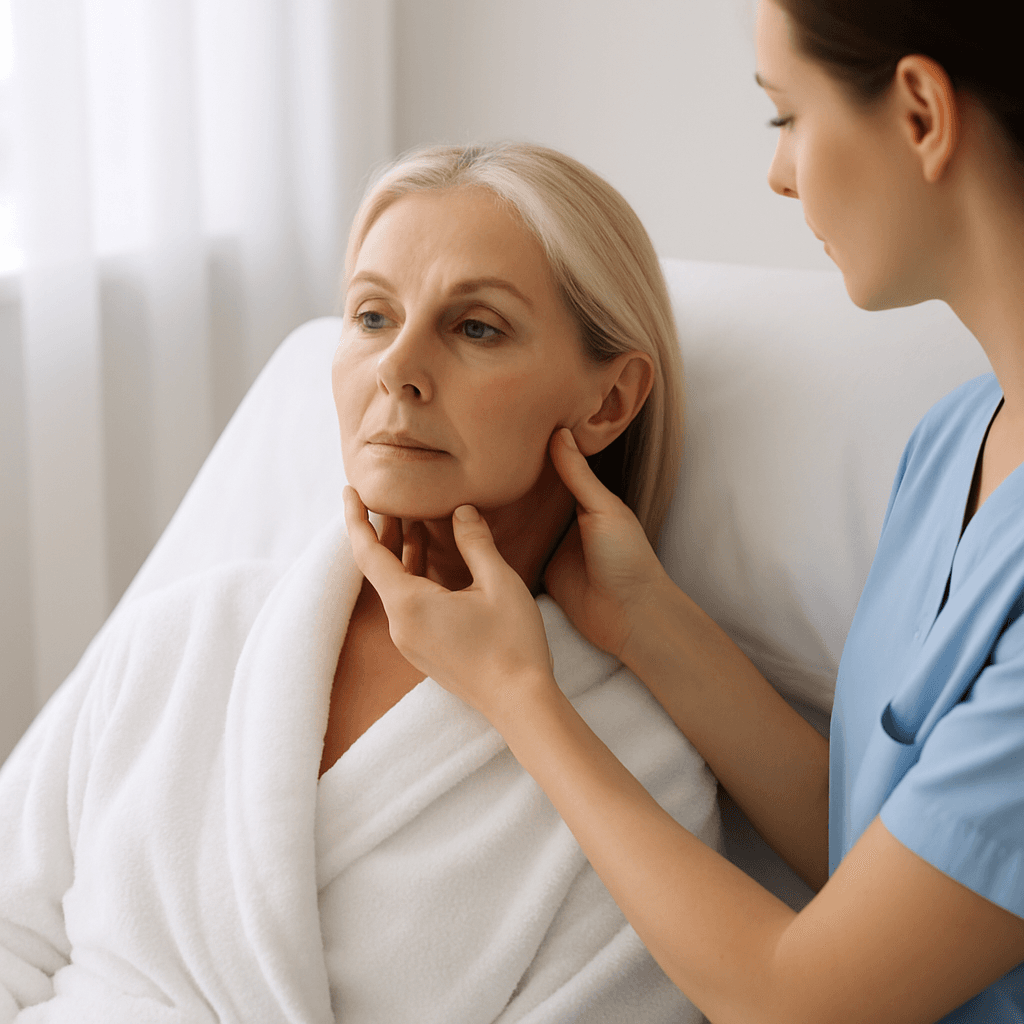
Why facelift aftercare matters
A facelift can tighten deeper facial tissues, remove excess skin and improve sagging in the lower face and neck. However, the final result depends not only on the surgery itself but also on careful aftercare.
Good aftercare helps reduce the risk of bleeding, infection, wound problems, visible scarring and delayed healing. It also helps you know what is normal during recovery and what needs urgent medical attention.
Every surgeon has their own protocol, and instructions can vary depending on the type of facelift, whether a neck lift or eyelid surgery was also performed, and your medical history. Always follow the specific advice given by your operating surgeon.
Immediately after surgery
Most facelift patients wake up with a supportive head and neck dressing. Some patients also have small drains placed under the skin to remove fluid or blood. These are usually removed within the first 24 to 48 hours, depending on the surgeon’s assessment.
You should expect some swelling, bruising, tightness, numbness and mild to moderate discomfort. The face may look uneven or more swollen on one side at first. This is common in the early stage, but sudden or severe one-sided swelling is not normal and should be assessed urgently.
First 24 hours
- Rest with your head elevated.
- Have a responsible adult stay with you if you are discharged the same day.
- Take prescribed medication exactly as instructed.
- Avoid bending, lifting, straining or sudden head movements.
- Do not remove dressings unless your surgical team tells you to.
- Eat light, soft foods if you feel nauseated or have jaw tightness.
Typical facelift recovery timeline
Recovery varies from person to person. Age, skin quality, smoking history, blood pressure, medications and the extent of surgery can all affect healing.
Days 1 to 3
Swelling and tightness usually increase during the first few days. Bruising may appear around the cheeks, jawline, neck or ears. You may feel tired, and some areas may feel numb or firm.
Your surgeon may remove drains, change dressings and check the incision sites. Keep your head elevated and avoid activities that raise blood pressure.
Days 4 to 7
Bruising and swelling may still be obvious, but discomfort often improves. Some patients feel well enough for short walks. Walking gently is useful because it supports circulation and may reduce the risk of blood clots.
Do not rush back into normal activity. Even if you feel better, the tissues are still healing.
Week 2
Many visible bruises begin to fade, and some stitches or clips may be removed if they have not already been taken out. You may still have swelling, tightness, numbness or a pulling sensation around the ears and neck.
Some patients feel comfortable being seen socially after 2 to 3 weeks, often with makeup if the surgeon allows it. However, this depends on bruising, swelling and the type of work or social event.
Weeks 3 to 6
Most patients gradually return to normal daily routines. Light exercise may be allowed, but strenuous workouts, heavy lifting and activities that involve bending or pressure on the face usually need to wait until your surgeon confirms it is safe.
Swelling continues to settle, but the face may still feel firm or numb in places.
Three months and beyond
By three months, many patients look more natural and feel more comfortable. However, subtle swelling, scar maturation and tissue settling can continue for 6 to 12 months or longer.
Sleeping position and head elevation
Sleep on your back with your head elevated for the period recommended by your surgeon, often at least one to two weeks. This can help reduce swelling and pressure on the incisions.
Avoid sleeping on your side or stomach early in recovery, as this can put pressure on healing tissues and may worsen swelling.
Wound care and incision management
Facelift incisions are commonly placed around the ears, in the hairline and sometimes under the chin. Keeping these areas clean and protected is important.
- Follow your surgeon’s instructions for cleaning incisions.
- Do not apply creams, oils, scar gels or antiseptics unless approved.
- Avoid picking at scabs or crusting.
- Keep hair products, hair dye and harsh skin products away from incisions until cleared.
- Protect scars from sun exposure, as UV light can darken healing scars.
Scar appearance usually improves over time. Raised, red or thick scars should be discussed with your surgeon, especially if you have a history of keloids or hypertrophic scarring.
Medication after facelift surgery
You may be prescribed pain relief, antibiotics, anti-nausea medicine or other medication. Take only what your surgeon has approved.
Some medicines and supplements can increase bleeding risk. These may include aspirin, ibuprofen, naproxen, vitamin E, fish oil, ginkgo, garlic supplements and some herbal products. Do not stop prescribed blood thinners or other important medications without medical advice, but make sure your surgeon knows about them before surgery.
Swelling, bruising and numbness
Swelling and bruising are normal after a facelift. They usually peak in the first few days and then gradually improve. Cold compresses may be recommended early, but they should be used carefully and not placed directly on the skin if sensation is reduced.
Numbness is also common because small sensory nerves are affected during surgery. Sensation often returns gradually over weeks to months, but some altered sensation can last longer.
Diet, hydration and bowel care
Choose foods that are easy to chew during the first few days, especially if your jaw feels tight. Good options include soups, yogurt, eggs, smoothies and soft cooked foods.
Drink enough water and include protein-rich foods to support healing. Constipation can happen after anesthesia and pain medication, so ask your surgeon whether a stool softener is appropriate.
Activity and exercise
Gentle walking is usually encouraged soon after surgery. It helps circulation and reduces stiffness. However, avoid anything that increases facial pressure or blood pressure in the early recovery period.
- Avoid heavy lifting and strenuous exercise until cleared.
- Do not bend with your head low; squat instead if needed.
- Avoid saunas, steam rooms and hot baths early in recovery.
- Avoid contact sports until your surgeon confirms full healing.
Smoking, alcohol and healing
Smoking and nicotine products significantly increase the risk of poor wound healing, skin loss, infection and visible scarring after facelift surgery. This includes cigarettes, vaping, nicotine patches and nicotine gum.
Surgeons usually advise stopping nicotine well before and after surgery. Be honest with your surgeon about nicotine use, as it can affect whether surgery is safe.
Alcohol can increase swelling, interact with medication and contribute to dehydration. Avoid alcohol until your surgeon says it is safe.
When to contact your surgeon urgently
Some symptoms can signal a complication and should not be ignored. Contact your surgical team immediately or seek emergency care if you have:
- Sudden, severe or one-sided facial or neck swelling.
- Rapidly increasing pain or tightness.
- Bleeding that soaks dressings or does not stop with instructions.
- Shortness of breath, chest pain or fainting.
- Fever, chills or feeling seriously unwell.
- Increasing redness, warmth, pus or bad smell from incisions.
- Black, dusky or blistered skin near the incision or flap area.
- New facial weakness, especially if it is worsening.
- Calf pain, swelling or redness, which may suggest a blood clot.
A hematoma, which is a collection of blood under the skin, is one of the most important early facelift risks. It may require urgent treatment.
Travel after facelift surgery in Turkey
International patients should plan enough time in Turkey for early follow-up before flying home. The exact stay depends on the operation and surgeon preference, but many patients are advised to remain locally for at least 7 to 14 days.
Flying too soon can be uncomfortable and may complicate access to your surgeon if a problem occurs. Long flights can also increase the risk of dehydration and blood clots. Ask your surgeon when it is safe to fly, especially if you have risk factors such as previous clots, obesity, smoking, hormone therapy or limited mobility.
Before you travel home
- Attend your planned follow-up appointments.
- Confirm that drains, stitches or clips have been managed as needed.
- Get written aftercare instructions in a language you understand.
- Ask what symptoms require urgent medical review.
- Make sure you have contact details for your surgeon or coordinator.
- Keep copies of your operation notes and medication list.
Follow-up care after returning home
Before surgery, ask how follow-up will work if you live abroad. Remote follow-up by photos or video can be useful, but it cannot replace in-person assessment if there is a complication.
It is sensible to identify a qualified doctor or plastic surgeon in your home country who can assess you if needed. This is especially important if you develop wound problems, infection, fluid collection or concerns about healing.
Skin care, makeup and hair care
Do not apply makeup over healing incisions until your surgeon confirms it is safe. Makeup on unhealed wounds can increase irritation or infection risk.
Gentle skin care can usually resume gradually, but avoid retinoids, acids, exfoliants and strong treatments until cleared. Hair washing may be allowed after a few days, depending on dressings and incisions. Hair dye and chemical treatments usually need to wait longer.
Sun protection and scar care
Sun protection is important after a facelift. Healing scars can darken with UV exposure, making them more noticeable.
- Wear a wide-brimmed hat when outdoors.
- Use sunscreen once incisions are fully closed and your surgeon allows it.
- Avoid tanning beds.
- Ask about silicone gel or silicone sheets if scars become raised or red.
Managing expectations during recovery
It is common to feel emotional during the first weeks after surgery. Swelling, bruising and temporary asymmetry can make it difficult to judge the result early on.
A facelift does not stop aging, and it cannot change every feature of the face. Skin quality, bone structure, weight changes and lifestyle all influence the long-term outcome. Revision surgery is sometimes needed, but decisions about revisions are usually delayed until healing is mature.
Questions to ask your surgeon about aftercare
- How long should I stay in Turkey after my facelift?
- When will my drains, stitches or clips be removed?
- Which medications and supplements should I avoid?
- When can I wash my hair, wear makeup and resume skin care?
- When can I fly home safely?
- What activities should I avoid and for how long?
- Who should I contact in an emergency after returning home?
- How will follow-up be handled if I live abroad?
Key takeaways
Facelift aftercare requires rest, careful wound care, activity restrictions and close communication with your surgical team. Swelling, bruising and numbness are expected, but sudden swelling, severe pain, bleeding, fever or skin color changes need urgent medical attention.
If you are travelling to Turkey for surgery, plan your recovery time realistically. Staying long enough for early follow-up and having a clear plan for care after returning home can make recovery safer and less stressful.